

10 Best Spots to See Fall Color in the Smokies (That Aren't Crowded)
Published: September 16, 2026 | Last updated: September 2026 | Written by: Jess & Michele, The WildNest Collective
The Great Smoky Mountains National Park draws over two million visitors during October — making it the single most crowded month in the park's history. Most of those visitors find their way to the same four or five locations. These ten spots are not those places.
Every location on this list offers equal or greater fall color quality to the park's famous overlooks. All are accessible without special permits. Most see a fraction of the traffic of Newfound Gap Road on a Saturday in peak color week. They are the spots that guests staying at The WildNest Collective get in their welcome guide — the ones that actually make an October trip feel like a discovery rather than a traffic jam.
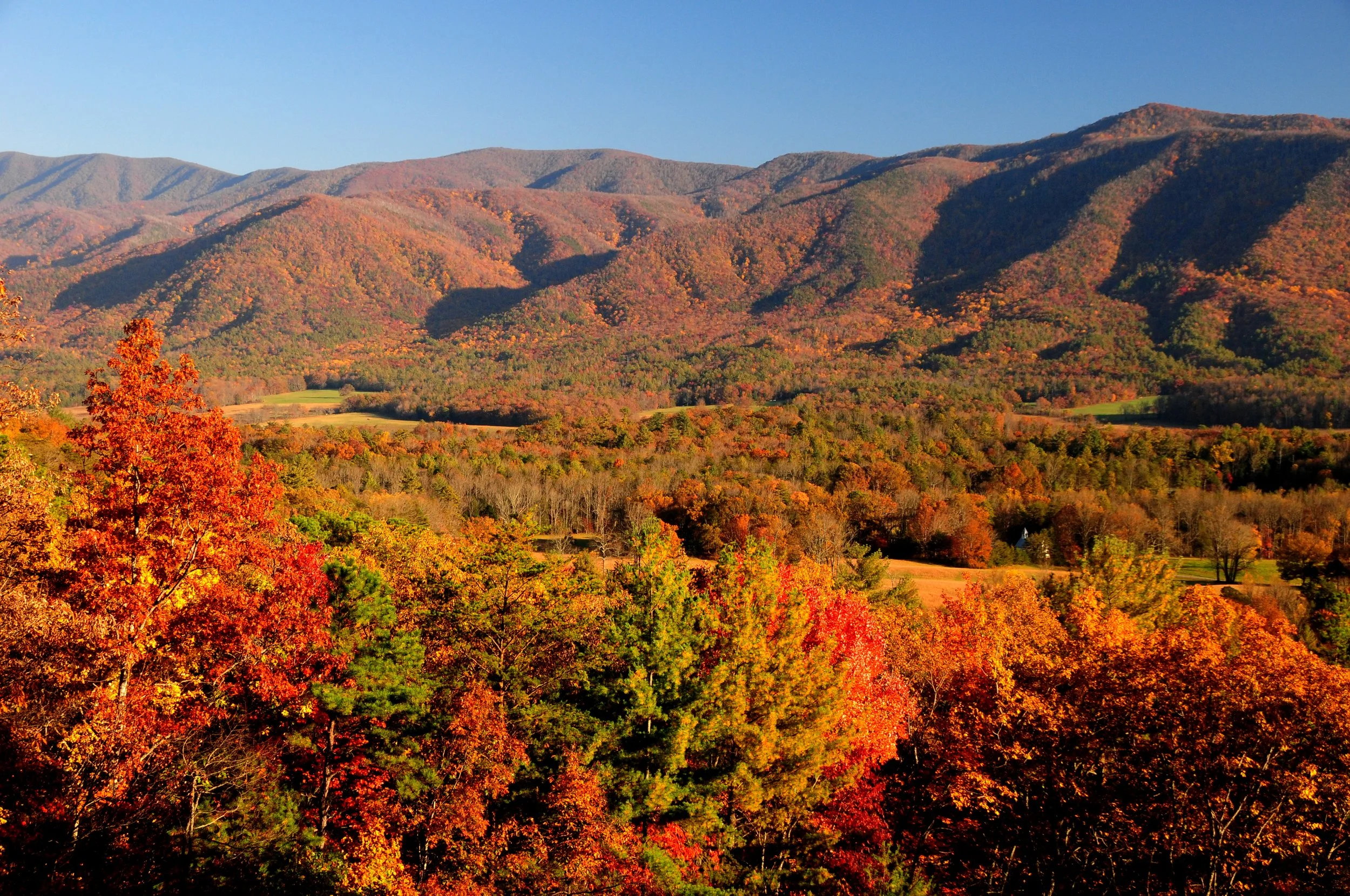
Fall Color on Rich Mountain Road Overlook - Photo by Sam Hobbs
1. Sutton Ridge Overlook — Cosby Area
Distance from Pittman Center: 35 minutes. Difficulty: Easy, 1.4 miles round trip. Elevation: ~2,750 ft. Peak window: October 10–20. The NPS lists this as a recommended autumn hike, which tells you everything you need to know about its quality. The trail begins at the Cosby Campground, follows the Self-Guiding Nature Trail, and reaches an overlook with long-range views of the surrounding ridgeline in color. The Cosby section of the park sees a fraction of the western section's visitors — on a Saturday morning in mid-October, you may have this viewpoint to yourself.
2. Albright Grove Loop — Cosby/Maddron Bald Area
Distance from Pittman Center: 30 minutes. Difficulty: Moderate, 4.0 miles. Elevation: ~2,800 ft. Peak window: October 12–22. The Albright Grove Loop passes through one of the finest remaining old-growth forests in the eastern United States — tulip poplars and hemlocks with trunks 25 feet in circumference, their canopy turning gold and bronze in October. This is the fall color hike for people who care about the forest, not just the view from above it. Trailhead at the end of Maddron Bald Trail off Laurel Springs Road.
3. Porters Creek Trail — Greenbrier Area
Distance from Pittman Center: 25 minutes. Difficulty: Easy–Moderate, 4.0 miles round trip. Elevation: ~2,900 ft. Peak window: October 12–22. Greenbrier is one of the park's most beautiful and most overlooked entrances. Porters Creek Trail follows a mountain stream through hardwood forest, past a historic homestead, and through a wildflower meadow that by mid-October has given way to the reds and golds of surrounding maples. The trail ends at a small cascade. The Greenbrier area sees genuine solitude even during peak foliage.
4. Heintooga Spur Road — Balsam Mountain
Distance from Pittman Center: 55 minutes via Blue Ridge Parkway. Difficulty: Drive-accessible. Elevation: 5,310 ft at Heintooga Picnic Area. Peak window: September 28–October 10. This is the high-elevation alternative for guests who want to see the early-season peak before the valley color arrives. The paved spur road off the Blue Ridge Parkway climbs to the Balsam Mountain ridge, where American beech and yellow birch turn gold in late September while Gatlinburg is still green below. Stunning and virtually uncrowded.
5. Big Creek Area — Northern Smokies
Distance from Pittman Center: 40 minutes. Difficulty: Easy–Moderate, 2.0–10.0 miles depending on route. Elevation: ~1,700–4,000 ft. Peak window: October 14–24. Big Creek is the park's most remote Tennessee-side entrance, accessed via a gravel road off I-40 near the North Carolina border. The Big Creek Trail follows a rushing mountain creek through hardwood forest with almost no visitor traffic. The color here is exceptional in mid-to-late October, and the creek's clear water reflecting autumn color is one of the best photography opportunities in the park.
6. Foothills Parkway West — Wears Valley to Chilhowee
Distance from Pittman Center: 30 minutes. Difficulty: Drive-accessible. Elevation: 1,400–2,600 ft. Peak window: October 15–25. The Foothills Parkway runs 17 miles along the park's western ridge with wide pull-offs and unobstructed views across the valley. This is the version of the grand overlook experience without Newfound Gap's Saturday gridlock. Look Rock Tower at the western end adds a 0.5-mile walk to a fire tower with 360-degree views. Go mid-week or early morning.
7. Chestnut Top Trail — Townsend Entrance
Distance from Pittman Center: 45 minutes. Difficulty: Moderate, 4.0 miles round trip. Elevation: ~2,800 ft. Peak window: October 12–22. The Chestnut Top Trail climbs from the Townsend entrance through a rich hardwood forest of chestnut oak, red maple, and sourwood. The sourwood — Tennessee's state flower tree — turns a striking scarlet before most other species and gives Chestnut Top its early October red pop. Rarely crowded, well-maintained, and offers a ridge viewpoint about halfway up.
8. Little River Trail — Elkmont Area
Distance from Pittman Center: 35 minutes. Difficulty: Easy, 2.0–11.0 miles (walk as far as you like). Elevation: ~1,700–2,700 ft. Peak window: October 16–26. The Little River Trail follows the river through Elkmont, past the historic Elkmont cabins — a cluster of early 20th-century vacation cottages in various states of preservation — and deep into the park's western forest. The historic cabins provide a context that most fall foliage hikes lack, and the trail allows you to set your own distance and return time. The river is stunning in October light.
9. Rich Mountain Loop — Cades Cove
Distance from Pittman Center: 50 minutes. Difficulty: Moderate–Strenuous, 8.5 miles. Elevation: ~3,700 ft peak. Peak window: October 10–20. Cades Cove's 11-mile loop road is one of the most congested routes in the park during foliage season. The Rich Mountain Loop hike provides the antidote — it climbs above the cove to a ridge with aerial views of the meadow and surrounding ridgeline at peak color, then returns through deciduous forest. Start early; the Cades Cove road itself opens for hiking and biking only on Wednesdays and Saturdays before 10am.
10. Roaring Fork Motor Nature Trail — Weekday Before 8am
Distance from Pittman Center: 15 minutes. Difficulty: Drive-accessible. Elevation: 1,400–3,200 ft. Peak window: October 15–25. Yes, Roaring Fork is on most Gatlinburg foliage lists. But a weekday morning arrival before 8am transforms the experience entirely. The 5.5-mile one-way loop through closed-canopy forest, past mountain streams and historic cabins, with no cars in front of or behind you, is genuinely one of the most beautiful fall experiences in the Smokies. The key is timing. Saturday at noon: gridlock. Tuesday at 7:30am: magic.
The pattern across all ten spots: earlier in the day, farther east in the park, or higher in elevation. The western trailheads fill before 10am on peak weekends. The eastern and northern sections rarely do. The reward for going early or going east is an October experience that feels the way the Smokies looked two decades ago.
→ The WildNest cabins on Braydens Way are 15 minutes from downtown Gatlinburg and 20 minutes from the Cosby and Greenbrier entrances — putting you closest to the least crowded, most spectacular fall color in the park. Check availability.
